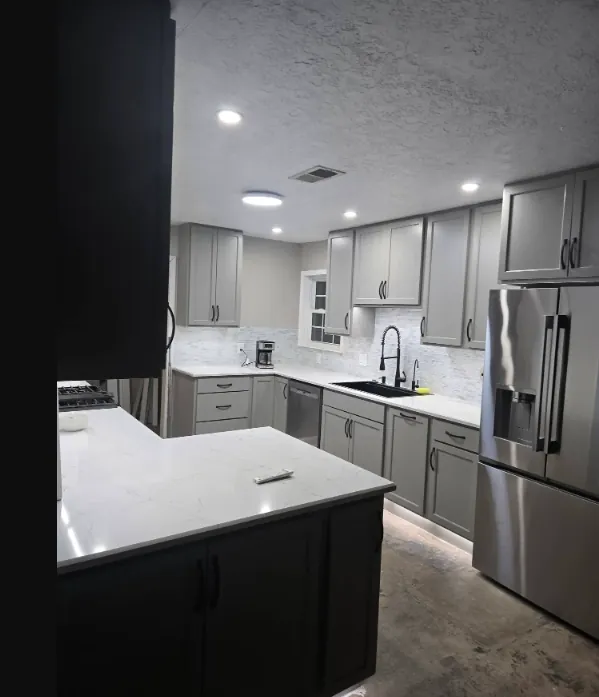
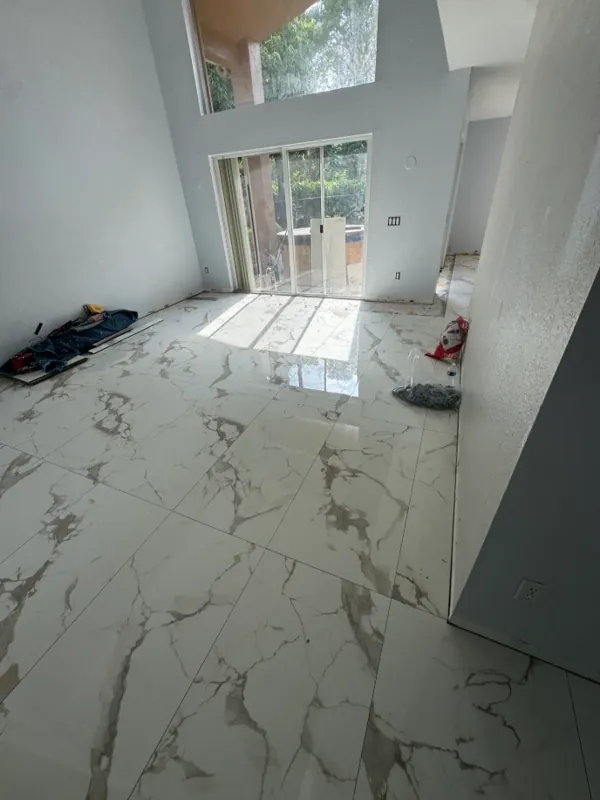
Ceramic
Works on walls, and on floors when the tile carries a floor rating.
Northeast Dixon / Sacramento, CA
Tile for offices, shops and common areas, scheduled around the hours you’re open.

What’s in the scope
Commercial tile work in Sacramento has to fit around your building, your schedule and the people using the space. Northeast Dixon Tile Installers works in offices, retail spaces, common areas, hospitality and tenant improvements. We handle the prep, layout, transitions and setting.
First we ask about traffic, cleaning, access and operating hours, and look at the existing surface. Slab cracks, flatness, drainage and the mortar or membrane decide how long the floor lasts. We’ll tell you what’s in our scope and what needs another trade or a structural review.
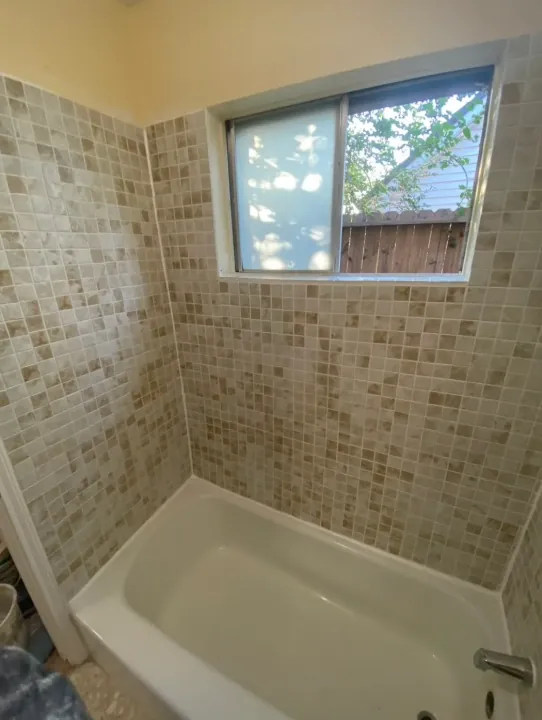
Common tile problems
Cracks, lippage and leaks usually trace back to prep, layout or the wrong setting materials.
Tile over a cracked or uneven commercial slab
We check cracks, hollow spots, moisture and flatness first. Small, non-structural cracks can get a crack-isolation membrane. Existing movement joints carry through the tile, and serious movement gets a structural review.
A rigid board, foam board, membrane, or mortar chosen by habit
We pick the system for the location and exposure. Cement board, foam board, waterproofing and uncoupling membranes each do a different job, and we follow the maker’s rules for seams, corners and drains.
Open joints, uneven tile, or weak contact under high-use floors
We use the specified thinset and trowel, mix it right, and lift tiles as we set to check coverage. Big tiles get back-buttered. We even out edges before the mortar sets, then keep traffic and carts off until it cures.
Water, dirt, or hard-water residue reaches vulnerable details
Wet areas get a membrane behind the tile at niches, benches, pans, corners and pipe openings, and floors slope to drains. Wet winter entrances need grippy tile and a place for water to go. We also plan how your staff will clean off hard-water deposits.
Our process
We walk the space and talk through occupancy, deliveries, shutdowns and dust control. Old tile, adhesive, coatings or unknown layers may need testing and a disposal plan. We mark thresholds, drains, doors and columns, and any area where your hours change the order of work.
Tile needs a solid, flat base. On a Sacramento slab we look for cracks, hollow spots, moisture, height changes and joints that must carry through. Framed floors that flex may need an engineer’s review. Expansive clay moves some slabs, so we look at the crack pattern before picking a repair.
We choose the backer and membrane for the location, tile and exposure, following the manufacturer’s instructions. Before setting, we lay out movement joints, perimeter gaps, transitions, slopes and starting lines. The layout also accounts for sightlines, traction and spare pieces for later repairs.
We set tile with the specified thinset and trowel and check coverage as we go. Large-format tile gets back-buttered. We keep joints aligned and edges flush across the floor. In wet areas, the waterproofing at corners, niches, benches, pans and pipe openings is finished before tile covers it.
After the mortar cures, we grout and leave movement joints flexible. Then we walk the space with you: edges, transitions, cleaning, and when traffic can come back.
A method for the material
Works on walls, and on floors when the tile carries a floor rating.
Dense and durable in many sizes. Choose by slip rating and where it goes.
Big tiles need a flatter floor, full mortar coverage and a planned joint layout.
Stone needs its own adhesive, sealer and care. We confirm the exact product before setting, since looks alone can’t identify it.
Small tiles need flat backing, aligned sheets and even joints.
Glass tile needs the mortar its maker specifies. Many glass tiles are rated for walls only.
Porous clay tile needs the right mortar, sealer and upkeep. Check the product rating before using it outside.
The details
Most commercial interiors sit on concrete slabs, and each one gets checked for cracks, contamination and flatness before tile. Removal can turn up old adhesive, patch or thinset, so we plan testing, dust control and disposal first. Signs of expansive-clay movement get a site-specific review. Entries and patios need outdoor-rated, slip-resistant tile and drainage away from the building. Summer heat shortens mortar working time and winter rain slows curing, so we stage materials and schedule around both.
The details
Commercial showers, locker rooms and wash-down areas need waterproofing that runs across floors, walls, pans and curbs and seals at every drain and pipe opening. For hard water, plan a cleaning routine that won’t scratch glaze, grout or stone. Saltillo is porous and needs its own cleaning and sealing. Outdoor tile needs traction, drainage and upkeep your staff can keep up with.
Keep the finish in mind
Keep traffic, carts, standing water and construction dust off new tile until the mortar and grout have cured per the product label. For daily cleaning, use a neutral cleaner and non-abrasive tools. Wipe up spills, put mats at the entries, and keep grit out of wet entrances.
In showers and wash-down areas, keep drains flowing, remove hard-water scale with an approved method, and check joints and caulk. Caulk wears out and needs replacing over time. Tell us early about loose tile, cracks that come back, ponding or movement. Keep outdoor areas clear of debris so they drain and stay grippy.
What affects price
Service area
Tell us your city and we’ll say whether we can get there and when.
FAQ
Answers to the questions we hear most.
Sometimes. We check that it’s solid, clean, flat and dry enough for the setting system. Existing movement joints carry through the tile, and significant movement gets reviewed first.
No. It covers some small, non-structural cracks within the maker’s limits. It can’t stop a building or the soil under it from moving.
Not always. Uncoupling and waterproofing are separate jobs. Some membranes do both and many do only one, so we check the product rating and follow that manufacturer’s details at seams, corners, drains and transitions.
We plan phasing, access, deliveries and cure time around your operating hours so the space can keep running. On the floor itself we watch coverage, flush edges, grout joints and movement joints.
A waterproofing membrane at the floor, walls, pan, curb, drains and pipe openings, with the floor sloped to drain. Grout lets water through, so the membrane does that job. At handoff we cover cleaning, caulk upkeep and drain access.
No. Natural stone and some grouts need a sealer matched to them. Glazed tile and most dense porcelain don’t. Saltillo is porous and needs its own care. Follow the product label and test a small spot first.
Free estimate
Share the approximate size and your tile ideas. We reply within 1 business day.