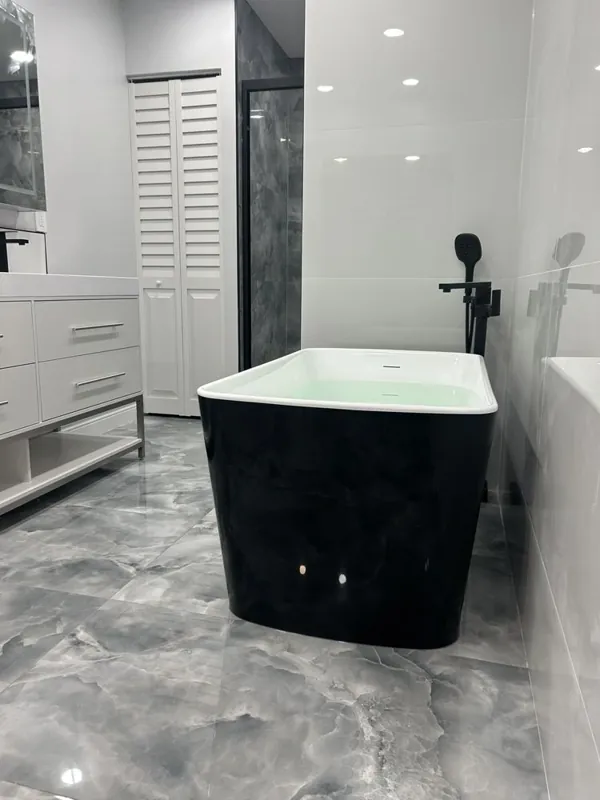
Ceramic
Works on walls, and on floors when the tile carries a floor rating.
Northeast Dixon / Sacramento, CA
Floors, showers and patios for Sacramento homes, set on a base we check first.
What’s in the scope
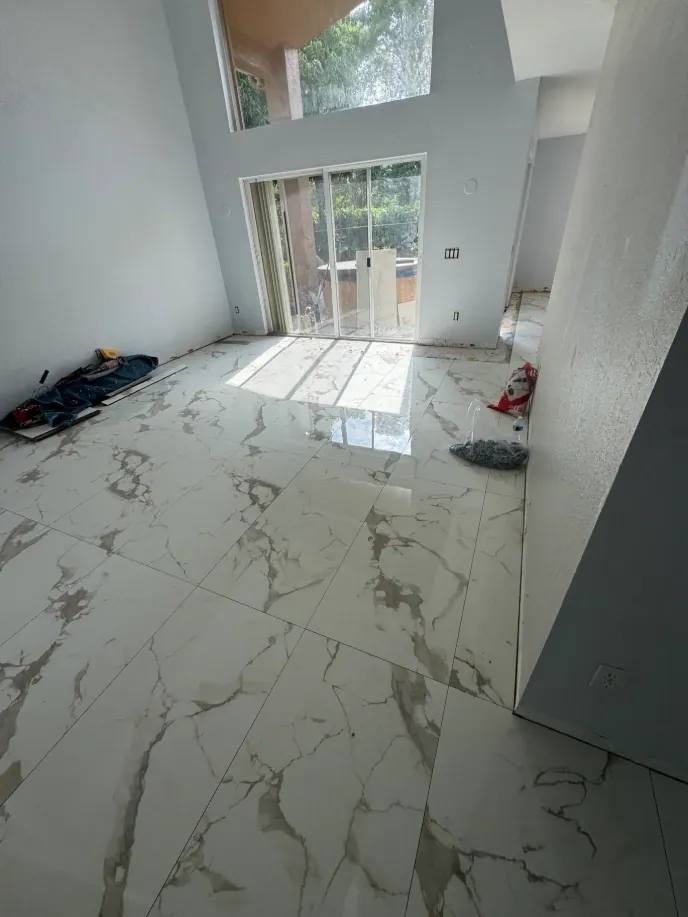
We start with what’s under the tile, then pick the pattern. Northeast Dixon Tile Installers does floors, walls, showers, entries and patios for Sacramento-area homeowners. We ask how you use the room, check the floor or wall, and tell you what prep it needs before any tile goes down.
Most tile failures start below the surface: a moving slab, a bouncy subfloor, trapped moisture or poor drainage. We plan for those, pick the right setting materials, and explain each decision so you know what you’re paying for.
Common tile problems
Cracks, lippage and leaks usually trace back to prep, layout or the wrong setting materials.
Tile cracks along a slab crack, or the same hairline keeps coming back.
We work out whether it’s a surface crack or the slab moving, and find the control joints. A crack-isolation membrane handles small in-plane movement within its rated limits. It won’t fix a structural problem, so an active crack gets looked at before we tile.
Loose tiles, hollow spots, or grout that breaks at edges.
We set tile on a clean, flat base with the right thinset and check coverage as we go. Tile and grout move differently, so edges and inside corners get flexible sealant where the floor needs room to move.
A shower looks finished but moisture reaches the framing.
Grout lets water through, so the waterproofing goes behind the tile. We run one continuous membrane across the walls, pan, niche, bench and curb, and seal every seam and pipe opening.
A patio or entry becomes slippery, stained, or damaged by weather.
We use outdoor-rated, slip-resistant tile and slope it to drain. Sacramento entries stay wet through the winter, so we plan where the water and grit go at the door.
Our process
We look at how you use the room, its size, the plumbing and the floors it meets. Then we settle tile size, trim, grout joints, movement joints and any removal before work starts.
We check that the base is solid, flat and not moving. On a slab we look at cracks and joints. On a wood floor we check for bounce and the condition of the sheathing. Some Sacramento slabs have settled or sit on expansive clay. If we see signs of that, we’ll tell you and suggest a structural review.
We take out loose flooring, damaged underlayment and old adhesive safely, and grind down high spots. Cement board and foam board each use their own fasteners, seams and waterproofing, so we stick to one system. Low areas get a leveling product made for the job, since thinset isn’t meant for flattening a floor.
We snap reference lines, balance the cuts and use the thinset the tile and base call for. Large tile gets back-buttered, and we pull pieces to check coverage. Cuts around outlets, door jambs, drains and niches are planned before we set. A flat base and a good layout keep the edges even.
Once the thinset cures, we grout the joints and fill movement joints with flexible sealant. Then we walk the room with you, check edges and transitions, and go over cleaning.
A method for the material
Works on walls, and on floors when the tile carries a floor rating.
Dense and durable in many sizes. Choose by slip rating and where it goes.
Big tiles need a flatter floor, full mortar coverage and a planned joint layout.
Stone needs its own adhesive, sealer and care. We confirm the exact product before setting, since looks alone can’t identify it.
Small tiles need flat backing, aligned sheets and even joints.
Glass tile needs the mortar its maker specifies. Many glass tiles are rated for walls only.
Porous clay tile needs the right mortar, sealer and upkeep. Check the product rating before using it outside.
The details
Before tiling a Sacramento slab, we check for cracks, old patches, adhesive residue, height changes and joints that need to carry through the tile. Expansive clay moves some slabs, so if we see signs of movement we’ll suggest a structural check. At a patio door we plan drainage, threshold height and door clearance, and finish with a clean edge between materials.
Patio tile has to be outdoor-rated, slip-resistant and laid over a base that drains. The transition should send water away from the house and leave an edge you can clean.
The details
In a shower we tie the waterproofing together at the pan, curb, corners, niche, bench, valve and drain. Niches and benches hold water on flat surfaces and in inside corners, so we slope them and seal the corners. Joints and cuts are planned so corners stay clean and easy to wipe down.
Hard water leaves mineral spots on glass, grout and stone. Rinse, squeegee and run the fan, and use a cleaner made for your tile. Abrasive or acidic cleaners can damage the surface. How often stone needs resealing depends on the stone and the sealer. Saltillo is porous and needs its own sealing and cleaning routine.
Keep the finish in mind
Stay off new tile for the cure time on the product label. Don’t drag furniture or scrub the floor until it’s ready. Put pads on furniture legs and sweep often, because sand scratches glaze and stone.
Sweep or vacuum, and use a cleaner that’s safe for your tile, grout and sealer. Wipe up spills. In the shower, squeegee the walls, run the fan during and after, and check the caulk at corners and around fixtures. If it pulls away, cracks or grows mold underneath, have it replaced.
Keep outdoor tile clear of leaves and soil so it drains, and look it over after big storms. If tiles lift, keep cracking, sound hollow or stay damp, note where and call us before patching the surface.
What affects price
Service area
Tell us your city and we’ll say whether we can get there and when.
FAQ
Answers to the questions we hear most.
Sometimes. We clean it and check flatness, cracks, moisture and joints first. Slab joints have to carry up through the tile, and small cracks can get a crack-isolation membrane.
No. Cement board is a backer for tile. In a shower it needs a waterproofing membrane over it, connected at the pan, corners, niche, bench, curb and pipe openings.
Large tile needs a flatter floor, or the edges won’t line up. We back-butter big pieces and check coverage. Warped tile and the pattern also change how much prep and layout work a floor needs.
It depends on the grout. Many cement grouts take a sealer, while some specialty grouts like epoxy don’t need one. Sealer helps with stains but doesn’t waterproof. Stone needs a sealer matched to that stone.
Only after we know what it is. We identify the flooring and adhesive as best we can, then check that it’s bonded, solid and won’t raise the floor too high. If it fails any of that, it comes out, with dust control and disposal planned.
We use outdoor-rated, slip-resistant tile, slope it to drain, and set the threshold height so the door still clears. Water should drain away from the door.
Free estimate
Share the approximate size and your tile ideas. We reply within 1 business day.