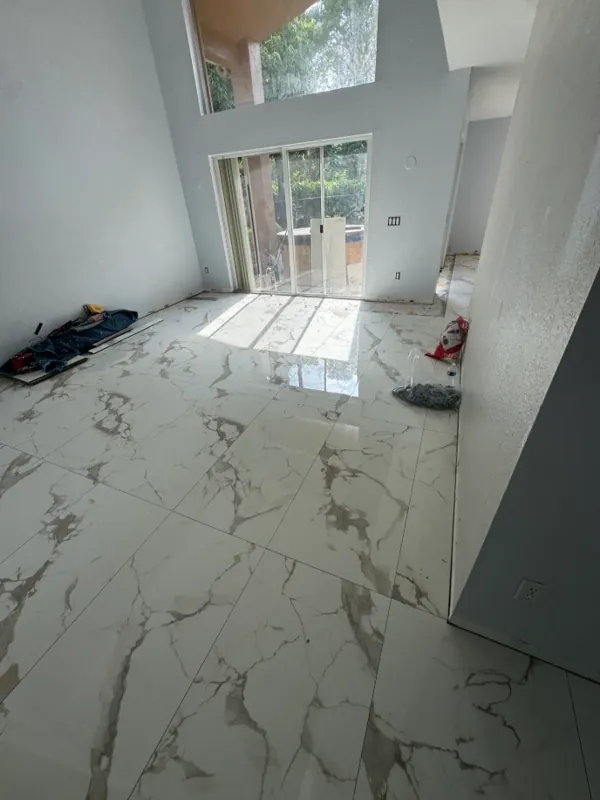
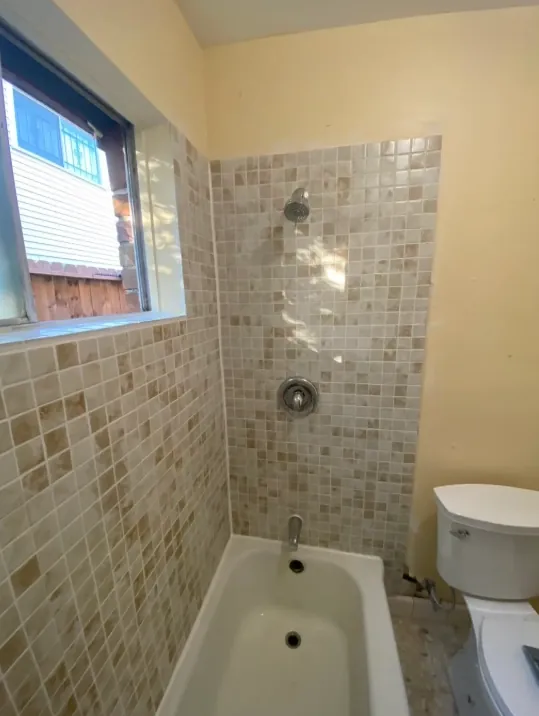
Ceramic
Works on walls, and on floors when the tile carries a floor rating.
Northeast Dixon / Sacramento, CA
Showers and bathroom floors, with the waterproofing done before the tile goes up.

What’s in the scope
A bathroom floor or shower has to handle water, movement and daily cleaning all at once. Northeast Dixon Tile Installers spends as much time on what goes under the tile as on the pattern you see. We work for homeowners, property managers and commercial clients.
Before we recommend a system, we look for movement, uneven framing, slab cracks, old adhesive, moisture and how the new floor meets the next room. The job might be a shower, floor, tub surround, niche or bench, or a tie-in to an entry or patio.

Common tile problems
Cracks, lippage and leaks usually trace back to prep, layout or the wrong setting materials.
Tile or grout cracks after installation
We check framing, floor bounce, slab movement, flatness and joint placement first. Big or active cracks get a structural review before any tile covers them.
Darkened shower corners or loose tile
We run one connected waterproof layer across the walls, pan, niche, bench, corners and drain, and let it cure fully before tiling.
Hollow spots, uneven faces, or chipped edges
We get the surface flat, use the right mortar, back-butter tile that needs it, and check coverage and edges while the tile can still be moved.
Water collecting at a threshold or patio edge
We set slopes, drains, door clearance and threshold heights before tiling. Outdoor tile has to be outdoor-rated, slip-resistant and laid over a base that drains.
Our process
We check framing, wall planes, floor flatness, level, bounce, and the old tile, slab or underlayment. A floor can look flat and still flex enough to crack tile or grout. Where slab cracks or expansive clay point to real movement, we’ll suggest a structural review.
Cement board and foam panels each have their own fasteners, seams, thickness and matching membranes. Shower walls, niches, benches and the pan need one continuous waterproof layer, whether that’s a liquid membrane, a sheet membrane or a pan system. It has to connect at corners, pipe openings, drains and changes of plane.
Removal can turn up old adhesive, damaged backing and a lot of dust, and all of it gets contained and cleared before new work. We fix flatness with the right patch or leveler. A floor that flexes needs framing work, which leveling can’t do. We lay out around the focal wall, plumbing, door swing, drain and niche shelves so you don’t end up with thin slivers at the edges.
We use the mortar and trowel the tile and base call for, and back-butter large or uneven pieces. We pull tiles to check coverage, which matters most in wet areas and on floors that carry heavy loads. Cuts fit around valves, drains and trim without weakening the tile. Sacramento summer heat shortens mortar working time, so we store and mix materials by the manufacturer’s instructions.
After the mortar cures, we grout the joints and leave movement joints open. Inside corners and perimeter gaps get flexible sealant. Natural stone gets sealer only if the stone and grout need it. Before we finish, we check slope, drainage, edges and transitions, and go over cleaning with you.
A method for the material
Works on walls, and on floors when the tile carries a floor rating.
Dense and durable in many sizes. Choose by slip rating and where it goes.
Big tiles need a flatter floor, full mortar coverage and a planned joint layout.
Stone needs its own adhesive, sealer and care. We confirm the exact product before setting, since looks alone can’t identify it.
Small tiles need flat backing, aligned sheets and even joints.
Glass tile needs the mortar its maker specifies. Many glass tiles are rated for walls only.
Porous clay tile needs the right mortar, sealer and upkeep. Check the product rating before using it outside.
The details
Many Sacramento-area bathrooms sit on concrete slabs with old repairs, hairline cracks, adhesive residue or a height change at the next room. We inspect the slab and plan tile direction, movement joints and the transition strip together. At a patio or exterior door, we also plan drainage, threshold height and outdoor-rated tile for wet winter entrances.
The details
We detail the pan, curb, niche, bench, valves, corners and drain so every waterproof layer connects before tile covers it. Sacramento-area hard water leaves mineral spots, and they show most on dark tile, glass and metal trim. Drying the walls and using a cleaner made for the surface keeps buildup down. Saltillo and other porous tile need their own cleaner and sealer, and time to dry. In commercial bathrooms we also plan for heavy cleaning, traction and your schedule.
Keep the finish in mind
Let grout, caulk and any stone sealer cure for the time on the label before regular use or cleaning. Skip abrasive pads, acidic cleaners and strong descalers unless the label says they’re safe for your surface. For hard-water spots, start with a soft cloth, water and a cleaner made for that surface. Stronger products can etch stone, cement grout, metal and some glazes.
Squeegee or towel off the walls and glass, keep the drain and weep holes clear, and check the caulk joints now and then. Replace a split or dark caulk joint before water gets behind it. Keep outdoor tile free of standing water and debris. Save the product labels for future repairs or resealing.
What affects price
Service area
Tell us your city and we’ll say whether we can get there and when.
FAQ
Answers to the questions we hear most.
No. Tile and grout give you a surface you can clean, but water gets through. The waterproofing is a membrane behind the tile that connects at the pan, corners, pipe openings, niches, benches and drain.
No. It handles small surface movement within its limits. It can’t repair a slab that’s moving or failing. We look at the crack and the area around it, and suggest a structural review if it’s large or still moving.
Either works as part of a complete, matched system. We choose based on the wall, thickness, seams, waterproofing method, plumbing and the manufacturer’s instructions.
We plan the framing, slope, corners, pipe openings, waterproofing and tile layout before we build it. Flat surfaces slope back toward the shower, and the waterproofing runs unbroken around the whole niche or bench.
With a sealer matched to that stone, finish and grout. Saltillo and other porous tile need specific cleaning, drying and sealing steps. Sealer cuts staining and absorption, but it doesn’t waterproof the shower.
Removal can turn up adhesive, damaged backing or uneven slab spots we couldn’t see at the first visit. We control dust, haul away debris, and check the base before leveling, waterproofing or tiling.
Free estimate
Share the approximate size and your tile ideas. We reply within 1 business day.