Ceramic
Works on walls, and on floors when the tile carries a floor rating.
Northeast Dixon / Sacramento, CA
We take out the old tile and get the floor ready for the new one.
What’s in the scope
Taking out tile is the first step of a replacement. The real work is dealing with what the old job left behind: loose mortar, adhesive, cracked underlayment, an uneven slab, water damage, or a floor height that no longer meets the next room. Northeast Dixon Tile Installers does tile removal and floor prep in Sacramento, CA for homes, showers, patios and commercial spaces.
We start by asking about the new tile, how you use the room and the finished height you need at doors. Then we protect the area, keep dust down, take the tile out in sections and check the base before recommending prep. That shows what’s normal prep and what needs another trade or a structural review.

Common tile problems
Cracks, lippage and leaks usually trace back to prep, layout or the wrong setting materials.
Tile is removed and new tile is bonded over a dusty, weak, or uneven surface.
We clean and test the base, remove anything loose, and patch or level only where the system allows it. Flat and level are different. A floor with an even slope can take tile, but dips and humps hurt coverage and leave uneven edges.
A Sacramento slab crack gets treated as proof the whole floor needs a membrane, or proof it needs nothing.
We record where the crack is, how wide it is, and whether it’s offset or moving. Small tile-plane cracks get a compatible crack-isolation membrane. If it looks like more than a tile problem, we ask for structural input.
A shower receives cement board, foam board, or tile grout without a complete water-management plan.
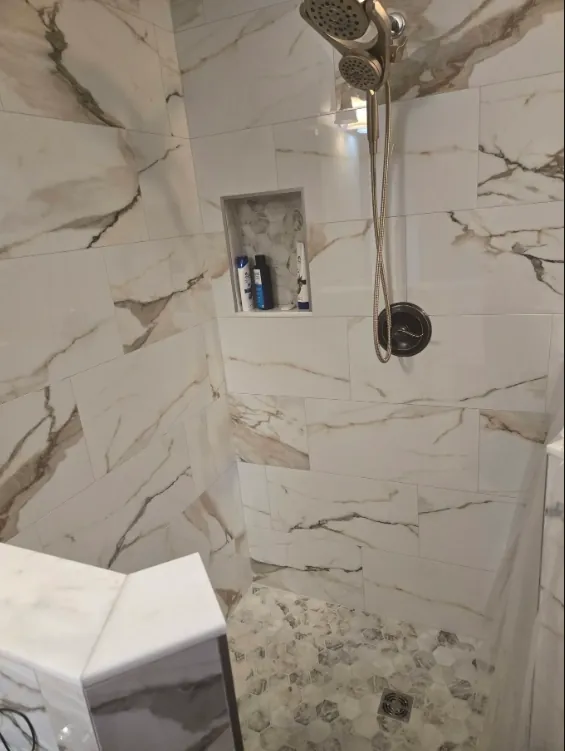
Grout lets water through, so the waterproofing goes behind the tile. We plan the pan, niche, bench, corners, pipe openings, drain and walls as one system. Niches and benches get sealed corners and a slope to drain.
A patio or busy commercial floor is selected by appearance alone.
Outdoor tile needs an outdoor rating, slip resistance and drainage. For commercial floors we talk through schedule, traffic, cleaning and transitions before ordering.
Our process
We look at access, furniture, appliances, baseboards, thresholds and where the debris goes. Older homes may have adhesive, sheet flooring or patch that needs testing before we disturb it.
We take up tile, grout, thinset, mastic and damaged underlayment with tools matched to the job. Dust control can mean plastic barriers, floor protection, vacuums on the tools and cleanup through the day. If we hit suspect adhesive, we stop and have it evaluated.
Once the base is bare, we check for bond loss, cracks, moisture, bounce, flatness and level. Expansive clay moves some Sacramento slabs. If a crack looks large or active, we’ll recommend a structural review.
Prep might mean grinding, patching, primer, leveler, cement board, foam board, an uncoupling membrane or waterproofing. Uncoupling handles small in-plane movement. Waterproofing keeps water out of the structure. Whatever we use has to match the base, tile, fasteners, drains and the manufacturer’s instructions.
We check the prepped base for flatness and transitions before setting. We plan cuts, movement joints and edge gaps, then set with the specified thinset, check coverage and back-butter large or uneven tile. Layout, joint width and cure time are settled up front.
A method for the material
Works on walls, and on floors when the tile carries a floor rating.
Dense and durable in many sizes. Choose by slip rating and where it goes.
Big tiles need a flatter floor, full mortar coverage and a planned joint layout.
Stone needs its own adhesive, sealer and care. We confirm the exact product before setting, since looks alone can’t identify it.
Small tiles need flat backing, aligned sheets and even joints.
Glass tile needs the mortar its maker specifies. Many glass tiles are rated for walls only.
Porous clay tile needs the right mortar, sealer and upkeep. Check the product rating before using it outside.
The details
On a house slab, removal can turn up old patching, paint, adhesive, control joints or a hidden crack. We sort out what can be prepped for tile and where a transition needs a set height, trim or a flexible joint. Sacramento summer heat cuts mortar working time, and wet winter entrances need drainage and slip-resistant tile.
At a patio door, the tile has to shed water away from the house. That takes outdoor-rated tile, the right setting materials, drainage and room for movement. Saltillo is porous and needs its own cleaning and sealing. Stone sealer is chosen for the stone and its finish.
The details
Commercial removal is planned around access, dust, working hours and when you need the space back. The finished floor needs a base that handles traffic, grippy tile, cleanable grout and transitions with no trip edges. We build cure time into the schedule.
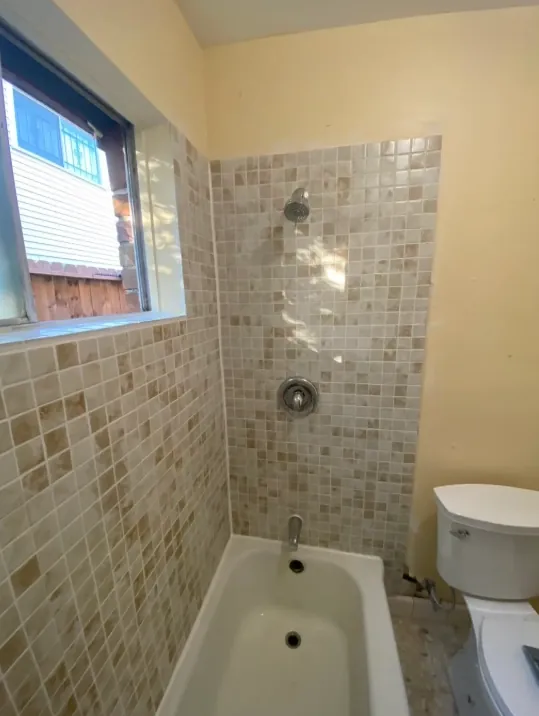
In a shower, removal can expose a failed pan, wet framing, or a niche and bench that were never waterproofed. We lay out the pan, drain, corners, niche, bench, pipe openings and wall membrane before rebuilding. For hard-water scale, rinse often and use a mild cleaner that’s safe for your tile and stone. Strong acids can etch them.
Keep the finish in mind
Keep people, water and stored materials off new prep and tile for the cure time on the product labels. Don’t slide appliances across fresh tile. Once it’s in use, put mats at wet entries, sweep up grit and clean with a product safe for your tile, grout and sealer.
In showers, rinse off mineral deposits often and skip abrasive pads on glaze or stone. Grout sealer helps with stains; it doesn’t waterproof. Call us early about hollow spots, cracked grout, damp areas or movement.
What affects price
After a site visit, we price demolition, prep and installation separately, based on what we find and the system we pick.
Service area
Tell us your city and we’ll say whether we can get there and when.
FAQ
Answers to the questions we hear most.
We choose removal methods that limit damage, but the result depends on how well the tile is bonded, the thinset, the slab and past repairs. Some grinding or spot patching is normal. We look at the bare concrete before choosing a prep method.
No. It depends on where the crack is, how wide, whether it’s moving, and what the membrane is rated for. Crack isolation handles small tile-plane cracks. It doesn’t fix structural movement, so large or active cracks may need a structural review.
No. Cement board is a backer for tile. A shower also needs a waterproofing system, with the seams, corners, pipe openings, pan, drain, niche and bench all done to that manufacturer’s instructions.
Tile needs a flat floor, and it doesn’t always have to be level. We check the tile size, layout, transitions and the manufacturer’s tolerance, then decide between spot patching, a leveler or keeping a planned slope.
Saltillo is porous and needs its own cleaning and sealing. For natural stone, the sealer depends on the stone, finish, exposure and how much upkeep you want. Use products made for that material and test a hidden spot first.
Older layers can include adhesive or patch that shouldn’t be disturbed without testing. We go slow, keep dust down and recommend testing for anything suspect. We set the removal and leveling scope once we know what’s there.
Free estimate
Share the approximate size and your tile ideas. We reply within 1 business day.